Getting started
Discover GitGuardian's Honeytoken
Honeytoken is a module of the GitGuardian platform. You can request a live demo!
The Honeytoken module is reserved for users with a "Manager" access level on the GitGuardian workspace.
Create and deploy your first honeytoken
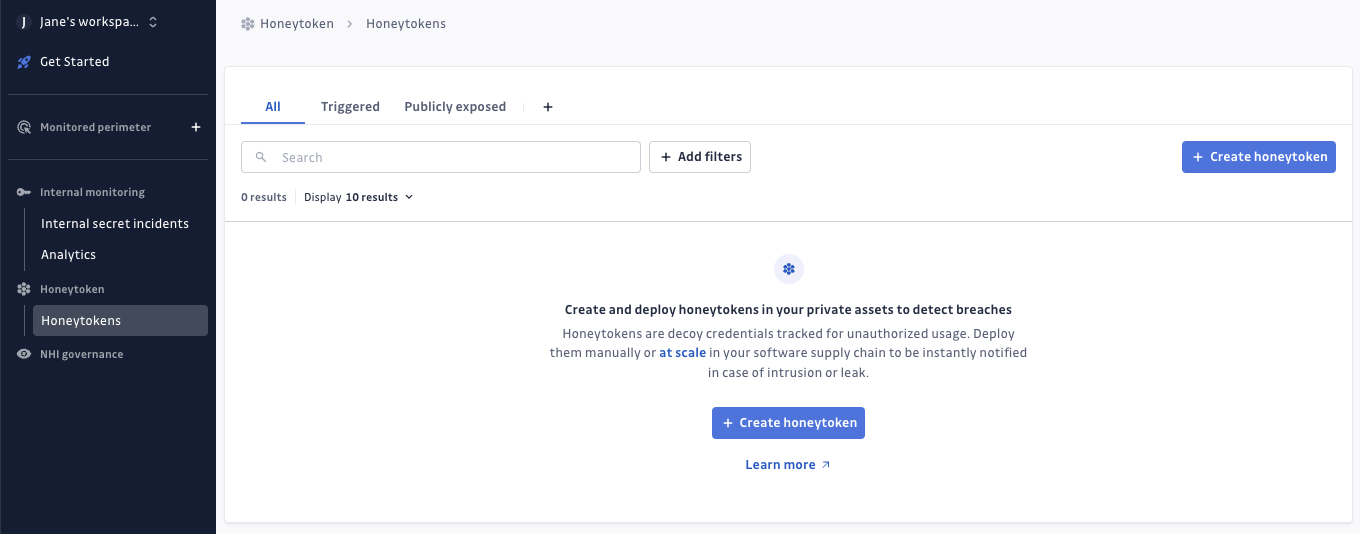
In the Honeytoken module, click “Create honeytoken”. Enter a name for the honeytoken, and optionally a description. The description may contain more detail about where and how exactly you will place this honeytoken. You can also select or create some custom tags to define your honeytoken in a more structured way.
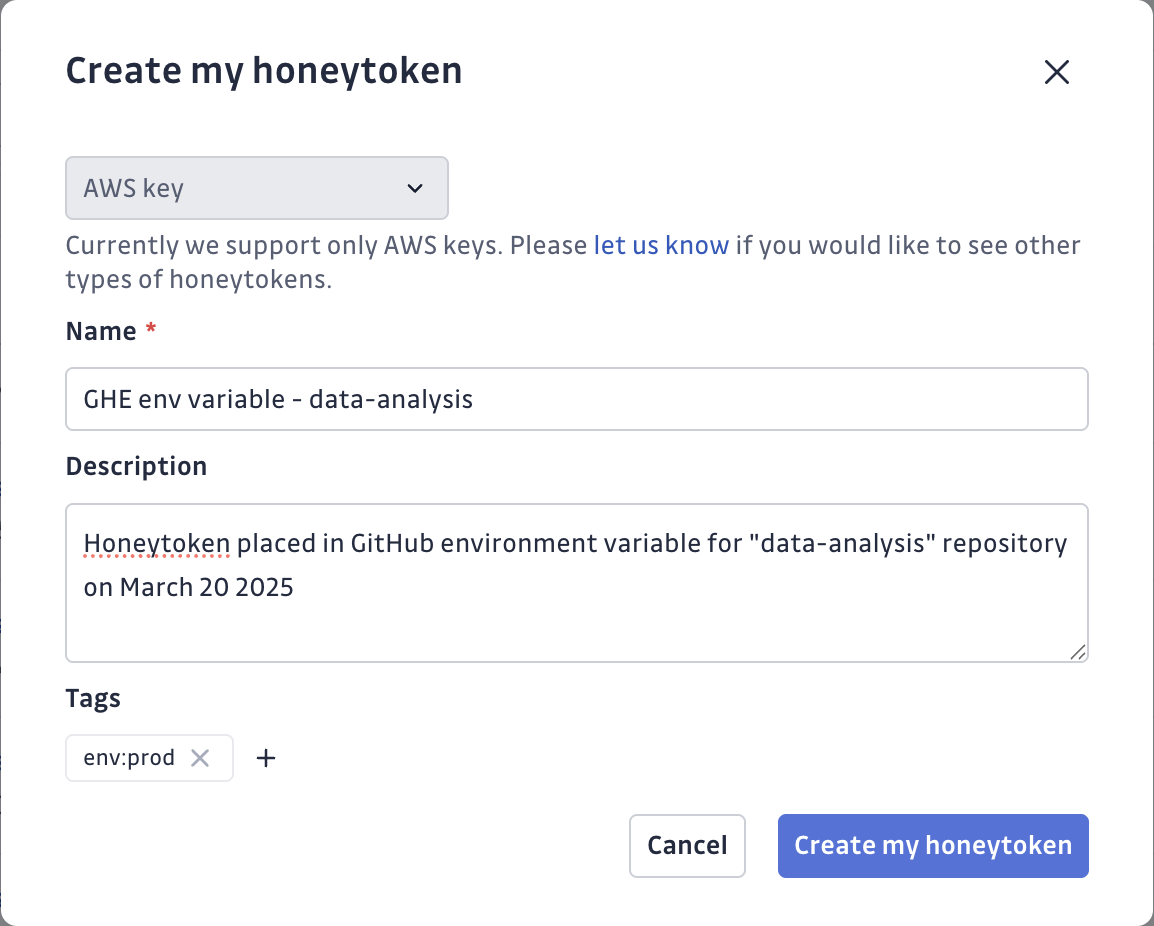
Note: The dashboard creates AWS key honeytokens. Kubeconfig honeytokens are created by planting them on an endpoint with
ggshield. See Honeytoken types.
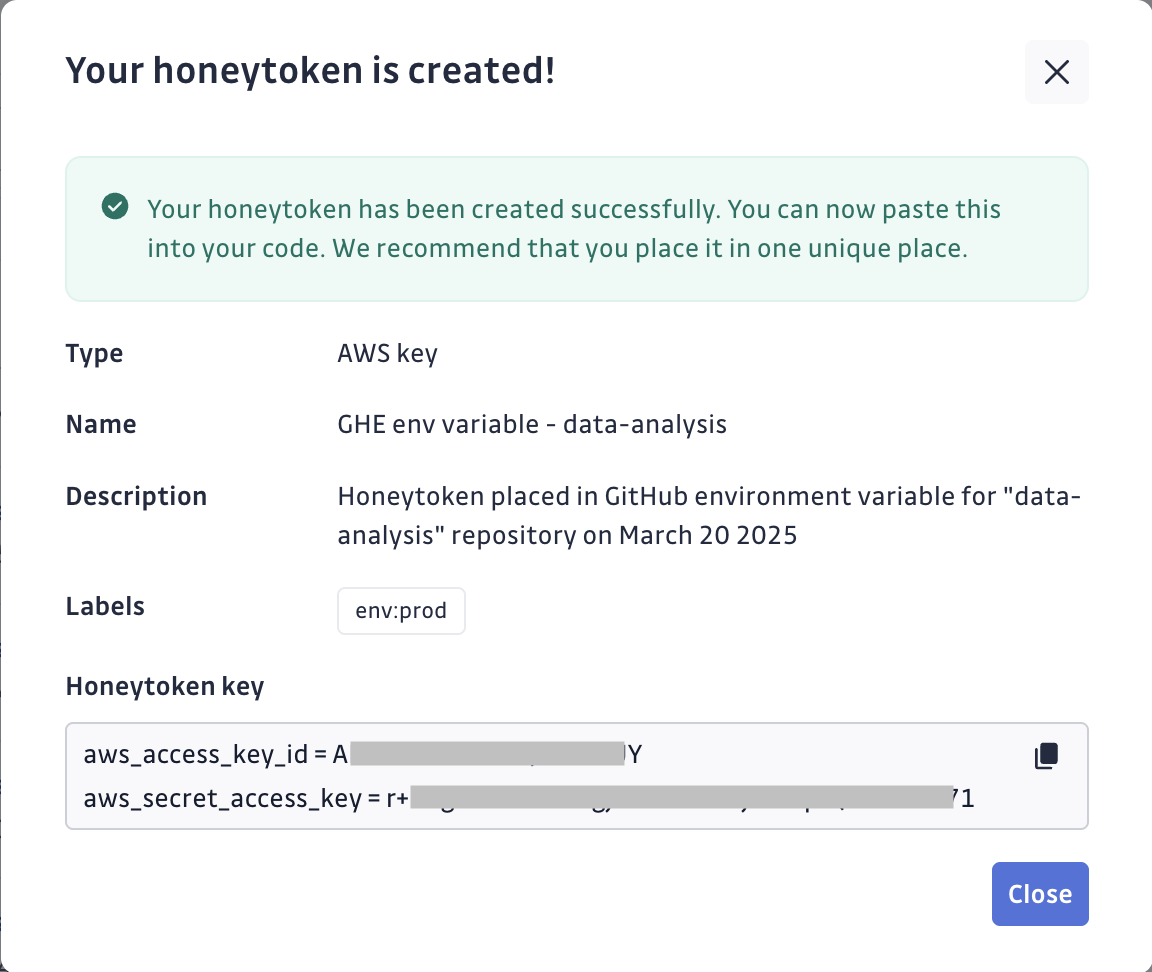
Congratulations! Your honeytoken creation is confirmed, and you get your honeytoken key.
Insert this key in the asset you want to protect! If an attacker ever trips on the honeytoken, you'll get an instant alert letting you know that it has happened.
This method allows you to decide exactly where and how your honeytoken will be inserted, but is quite manual. To deploy honeytokens across numerous repositories, use Deployment jobs. To plant them on developer machines, use Endpoint Protection. See all the deployment methods.
Test your honeytoken
If you want to test the triggering and alerting mechanism, you can trigger your own honeytoken. The steps below are for AWS key honeytokens. For kubeconfig honeytokens, see Test a kubeconfig honeytoken.
To use the following method, ensure that the AWS CLI is installed on your system. If not, refer to the official AWS CLI documentation for instructions on how to install it.
In the honeytoken detail page, click “How to test your honeytoken”.
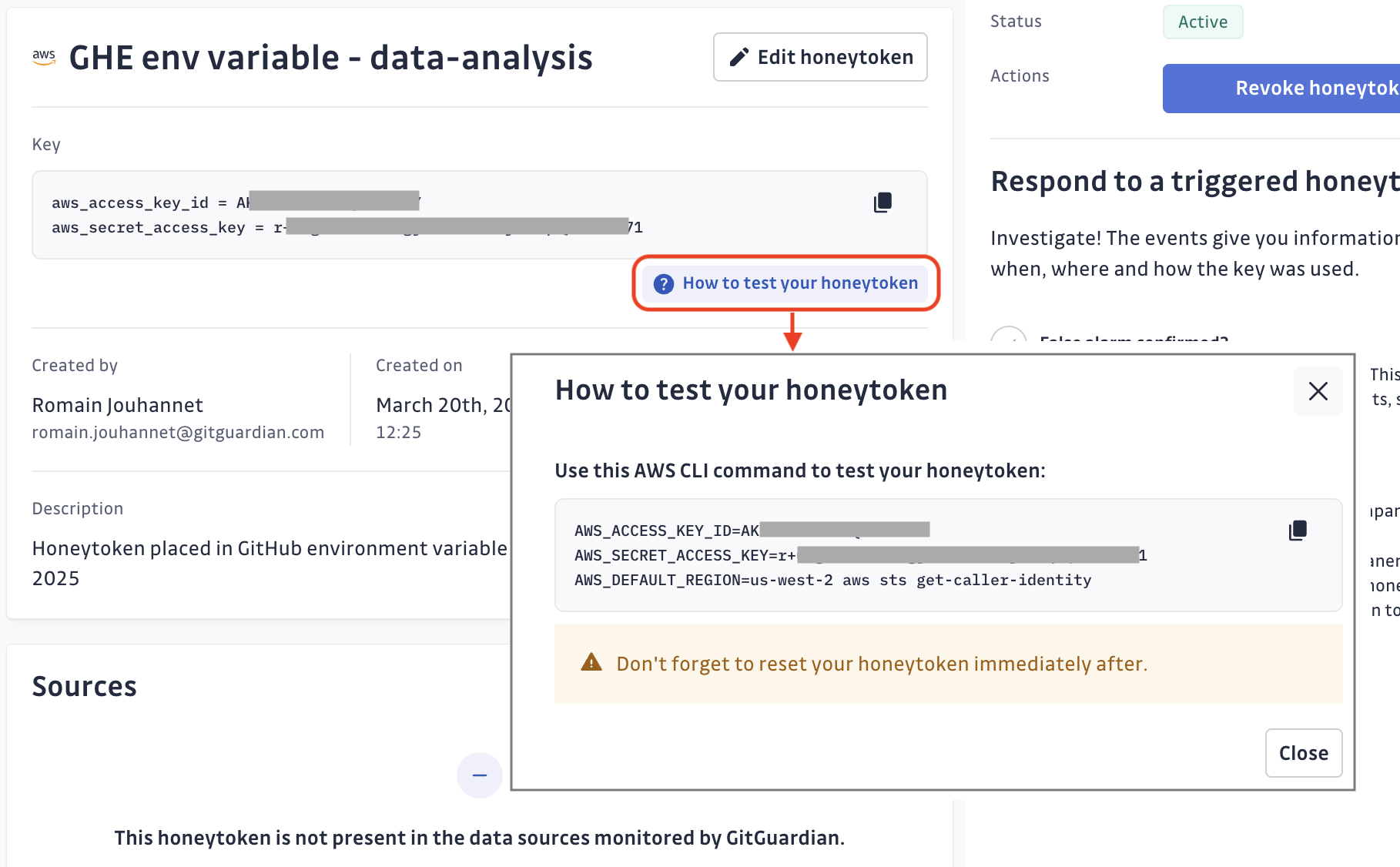
Copy the AWS “get-caller-identity” command and run it in your terminal or command prompt.
This will generate an event and thus trigger the honeytoken.
Don’t forget to reset your honeytoken afterward to be alerted of any “real” trigger on it.

