4 posts tagged with "api"

View All Tags

Set your own validity status on a secret

calendar icon   Release Date: August 14, 2026

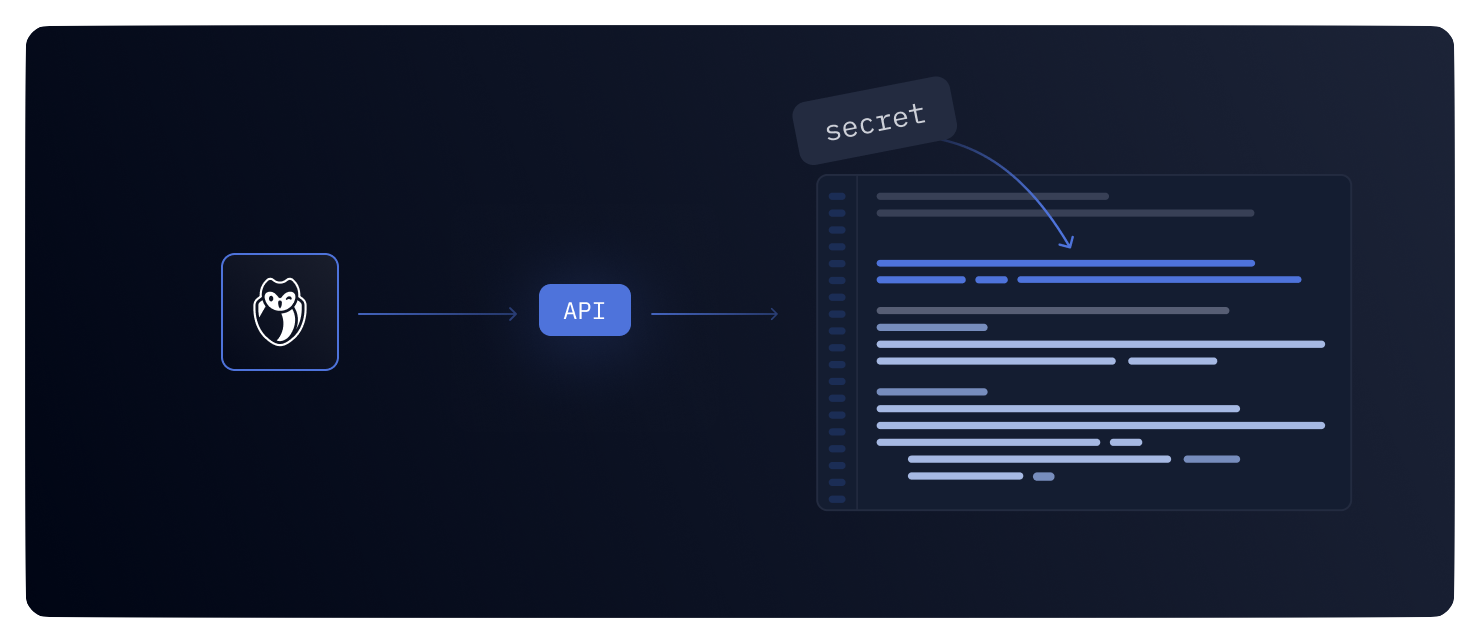
Some of your secrets belong to systems GitGuardian cannot reach: your internal services, your own platforms, your private APIs. GitGuardian cannot tell you whether those secrets are still active. It reports them as cannot check or failed to check.

You can check them yourself. You can now send the result back to GitGuardian, with one API call.

What does this mean for you?

  • You run the validity check on your side, on the systems only you can reach.
  • You send the result to GitGuardian: valid or invalid.
  • GitGuardian uses it as the validity of the secret, everywhere it uses validity: filters, severity and everything downstream.

Incidents display Custom validity with the date it was set, so your team can see the status came from you and not from GitGuardian. Setting it and removing it are both recorded in the incident activity log and in your audit log.

The status applies to the secret, so every incident for that secret shows it.

Get Started Today!

Use a personal access token with the secrets:write scope.

Learn how to set your own validity status

Enhancements

  • Public API: Added the ability to set the "Only use detectors with validators" option when creating or updating custom sources through the public API, enabling fully automated and consistent source configuration.
  • Sources: Improved the clarity of tooltips on disabled source actions, so it is now clear why monitoring, criticality, or team assignment may be unavailable for a given source.

Fixes

  • Public API: Fixed an issue where an API endpoint was missing from the OpenAPI specification and published documentation.
  • Incidents: Fixed an issue where incident IDs were not displayed in the ID column despite being returned correctly.
  • Dashboard: Fixed an off-by-one issue in the date filter.
  • Sources: Resolved a performance issue that caused bulk scan requests to fail when enqueuing a very large number of sources at once.

Public Monitoring API endpoints now available

calendar icon   Release Date: August 1, 2025

Incident Playbook Thumbnail

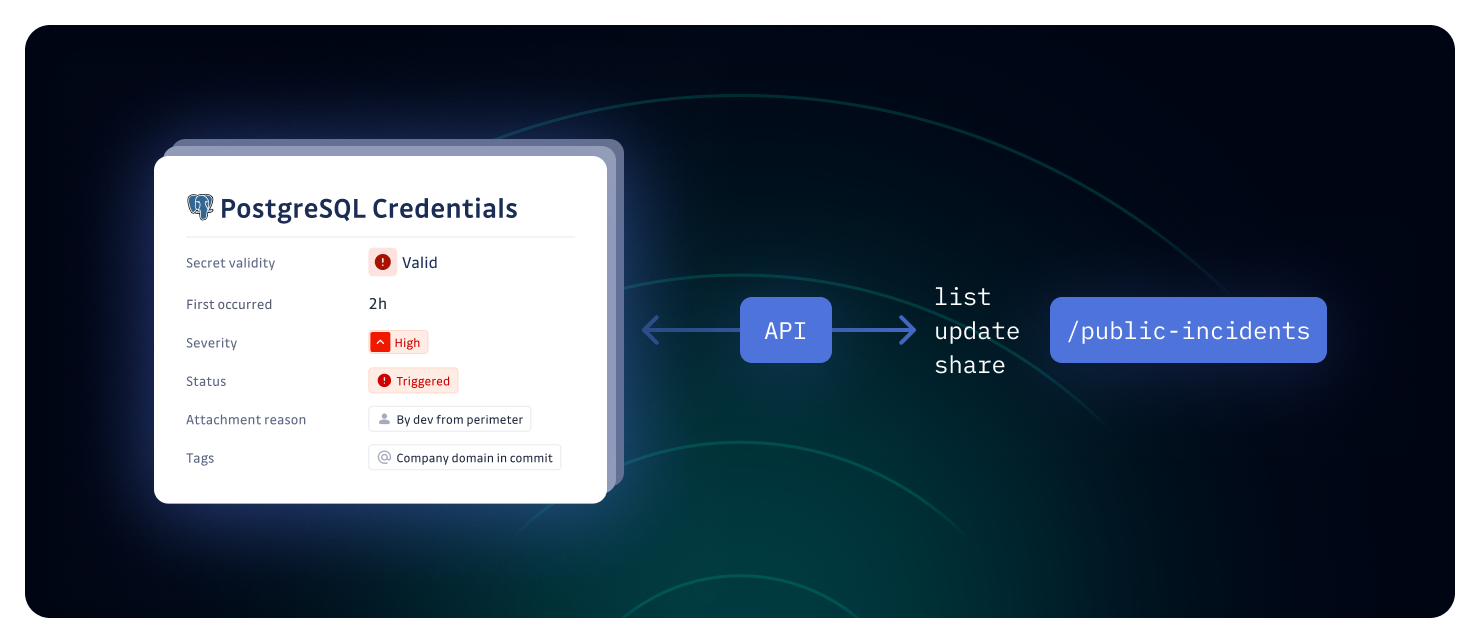
For customers with Public Monitoring enabled, we're excited to announce the release of dedicated API endpoints, enabling programmatic access to manage Public Monitoring findings.

What's new?

We've introduced new endpoints that allow you to:

  • Manage and interact with public secret incidents
  • List public perimeter developers information The new endpoints maintain consistency with our internal incidents API structure, ensuring a familiar experience for existing API users.

Why does this matter?

With these new API endpoints, you can:

  • Integrate GitGuardian's public monitoring capabilities directly into your existing security tools
  • Create automated workflows to handle incidents more efficiently
  • Reduce response time by eliminating manual platform interactions

Check our API documentation to get started.


Fixes

  • Incident permissions: Fixed an issue where assignees with "can view" permissions would be hidden from the incident's UI.
  • Slack integration: Fixed an issue where duplicate secret occurrences were created when thread replies were posted to channels in Slack.
  • JFrog Artifactory integration:
    • Fixed an error in repository last update date retrieval during recurrent scans.
    • Improved error handling and diagnostics for health check connectivity issues.

GitGuardian MCP Server - Security in Your AI IDE

calendar icon   Release Date: June 19, 2025

The GitGuardian MCP (Model Context Protocol) Server is now available on GitHub. This integration brings GitGuardian's security capabilities directly into your AI-powered development environment, supporting Cursor, Windsurf, and any IDE implementing the Model Context Protocol.

The MCP Server enables your AI agent to read and analyze security incidents, generate honeytokens, and perform automated remediation tasks—all without leaving your development workflow.

Key Benefits

  1. Eliminate Context Switching: Access security scanning and incident management directly within your AI IDE without switching to GitGuardian dashboards.
  2. Real-Time Security Feedback: Catch security issues immediately during development, before they enter your codebase.
  3. Enhanced Developer Autonomy: Empower developers to manage security posture independently with direct access to GitGuardian's tools.

Getting Started

Install Developer MCP Server

For Cursor users: Click the button to install the GitGuardian MCP Server directly in your IDE.

For other IDEs: Follow our setup instructions to integrate the MCP Server into your environment.

Documentation: Read the full GitGuardian MCP Server documentation for detailed setup, tool reference, and security information.


Enhancements

  • Custom Tags API: Enhanced the custom tags filter in the public API to support filtering by key/value pairs in addition to IDs, improving search flexibility for better incident management. Learn more.
  • Teams: Optimized the /teams API endpoint to reduce loading times for workspaces with large team structures.
  • Playbook: "Auto-resolve secrets incidents when valid secrets are revoked" playbook is officially activated for all accounts. Learn about Playbooks
  • Custom remediation: Added dynamic links to custom remediation pages, providing users with seamless access to relevant documentation and revocation support.

Fixes

  • Emails: Resolved an issue where email alerts were being sent to inactive workspace members.
  • Custom Tags:
    • Resolved pagination issues in the custom_tags endpoint that were causing incorrect next page URLs.
    • Fixed an issue where assigning tags to selected filtered issues was incorrectly applying tags to all issues instead of only the selected ones.
  • GitLab: Improve permission checking for GitLab group integrations to properly handle inherited permissions from parent groups.
  • Azure DevOps Integration: Improved token handling to prevent unnecessary revocation of Azure DevOps installations due to intermittent 401 errors.
  • Secret analyzer: Improved behavior to ensure secret analyzer is properly disabled when validity checking is turned off.

Securely Access Secret Values via API with GitGuardian's New “Secrets” Endpoint

calendar icon   Release Date: May 23, 2025

secret API thumbnail

GitGuardian is excited to announce a new API endpoint /v1/secrets/{secret_id}, allowing users to securely access secret values directly through our API.

This feature introduces several key benefits:

  1. Enhanced Security Automation - Integrate secret remediation into existing security workflows and tools with secure API access to secret values.
  2. Reduced Manual Intervention - Eliminate the need to manually copy secrets from the UI, saving time and reducing human error.
  3. Comprehensive Security Controls - Multiple security layers (PAT permissions, workspace settings, IP allowlisting) ensure secrets are accessed only by authorized users.
  4. Complete Secret Context - Receive both the secret value and detector information in a single API call for efficient remediation.

Read more in the documentation